What travel expenses and other costs can be part of a whiplash claim
Understanding the full financial impact of a whiplash injury
If you have been injured in a road traffic accident that was not your fault, you may be thinking about the physical recovery. Whiplash can take weeks or months to heal, and during that time the financial side of things can feel like a second injury. Many people assume that a whiplash compensation claim only covers pain and suffering. In practice, a properly prepared claim can also include a range of out-of-pocket expenses and future costs that flow directly from the accident. Knowing what those costs are and how they are calculated helps you see the full picture of what you might be entitled to.
How a claim breaks down into two main parts
Scottish personal injury law separates compensation into two broad categories. General damages cover the pain, discomfort and loss of amenity caused by the injury itself. Special damages cover the financial losses and expenses you have incurred because of the accident. When you look at a whiplash claim, special damages often make up a significant portion of the total award, especially if your recovery has taken longer than expected or if your injury has forced you to change your daily routines.
General damages: the starting point
General damages are based on the severity of the whiplash and how long it takes you to recover. The Judicial College guidelines, which courts in Scotland use as a reference, set out bands of compensation depending on factors such as the duration of symptoms, whether there is any permanent stiffness or pain, and whether the injury has affected your ability to carry out everyday activities. This part of the claim is relatively straightforward once you have a medical prognosis from a qualified doctor. The prognosis describes the expected course of recovery and any lasting effects, and that report forms the foundation of the general damages calculation.
Special damages: the costs that add up
Special damages are the actual financial losses you have suffered. They are often easier to prove because they are backed by receipts, invoices, bank statements or payslips. However, many people overlook some of these costs simply because they do not realise they can be included. The key principle is that special damages aim to put you back in the position you would have been in if the accident had not happened. That means you can claim for any expense or loss that is directly linked to the injury.

Travel expenses: a common but often missed cost
One of the most frequent special damages in a whiplash claim is travel expenses. After a whiplash injury, you may need to attend medical appointments, physiotherapy sessions, hospital check-ups or even a consultation with a legal adviser. If you cannot drive because of neck pain or stiffness, or because your doctor has advised against it, you may have to rely on taxis, public transport or lifts from family and friends. The cost of each journey can be claimed, provided you keep a record of the date, purpose and distance or fare. If a friend or family member drives you, you can claim a mileage rate that covers fuel and wear and tear, typically based on HMRC approved rates. Even parking fees and congestion charges can be included. The total can be surprisingly high over several months of recovery.
Lost earnings: the biggest special damage for many
For most people in work, the largest financial loss after a whiplash injury is the income they lose while they are unable to do their job. If your doctor has signed you off work, or if you have had to reduce your hours because of pain or restricted movement, you can claim for the earnings you have missed. This is where the phrase compensation for lost earnings comes into play. To make this part of the claim, you will need to provide financial evidence such as payslips, a letter from your employer confirming your normal hours and rate of pay, and a record of any sick pay or statutory sick pay you have received. The calculation deducts any sick pay you have already been paid, so the claim covers the net loss.
If you are self-employed, the process is similar but relies on your tax returns, invoices and business accounts to show your average earnings before the accident. The claim can also cover lost overtime, bonuses or commission that you would reasonably have expected to earn. The key is to document everything clearly, because the other side will scrutinise the figures.
Treatment costs and other medical expenses
If you pay for private physiotherapy, chiropractic treatment, acupuncture or any other therapy to speed up your recovery, those costs can be claimed as special damages. The same applies to prescription charges if you are not exempt, and to over-the-counter painkillers, neck braces or supportive pillows that your doctor or physiotherapist recommends. Keep the receipts and a note of why each item was needed. Even mileage to and from treatment sessions counts as a travel expense, so keep that record too.

Future losses: planning for ongoing costs
Some whiplash injuries have longer-term effects. If your medical prognosis indicates that you will continue to experience pain or restricted movement for months or years after the claim is settled, you may be able to claim for future losses. This could include future compensation for lost earnings if you are likely to need time off work again, or if your injury will reduce your earning capacity in the long run. It can also cover the cost of future treatment sessions or ongoing medication. Calculating future losses requires a careful assessment by your legal team, supported by the medical evidence and, if necessary, by an occupational therapist or a vocational expert. The aim is to ensure that the settlement reflects not just what you have already lost, but what you are likely to lose in the future.
Other expenses that are often overlooked
Beyond the obvious categories, there are smaller costs that can still add up. If you need help with household chores such as cleaning, gardening or childcare because you cannot manage them yourself, the cost of hiring someone can be claimed. If a family member provides that help for free, you can still claim for the value of their time, though this requires a record of the hours and the type of work done. Similarly, if your injury means you cannot carry out repairs or maintenance you would normally do yourself, the cost of hiring a tradesperson is claimable. Some people also claim for the cost of adapting their car with a different seat or headrest, or for the cost of a taxi if public transport becomes too painful. The guiding principle is that any expense that is reasonable and directly caused by the injury can be included.
What financial evidence you will need
To succeed with a special damages claim, you need to prove each item with clear financial evidence. This means keeping a simple diary or spreadsheet from the start of your recovery. Note the date, the nature of the expense, the amount and who you paid. Attach receipts, invoices, bank statements or credit card statements. For lost earnings, keep copies of payslips, a letter from your employer and any sick pay statements. If you are self-employed, gather your tax returns and a schedule of your average monthly income. The more organised you are, the smoother the process will be. Your legal adviser will need this evidence to present the claim to the other side's insurer.
How the process works in Scotland
In Scotland, whiplash claims are handled under the same general personal injury framework as other accident claims. The process usually starts with a medical assessment to establish the diagnosis and prognosis. Once the medical report is ready, your legal team can prepare a schedule of special damages listing every expense and loss. That schedule is sent to the other side's insurer along with the supporting evidence. The insurer may accept the figures, or they may ask for more proof or challenge certain items. If agreement cannot be reached, the case can go to court, but most claims settle before that stage. The key is to have strong evidence for every item you claim.
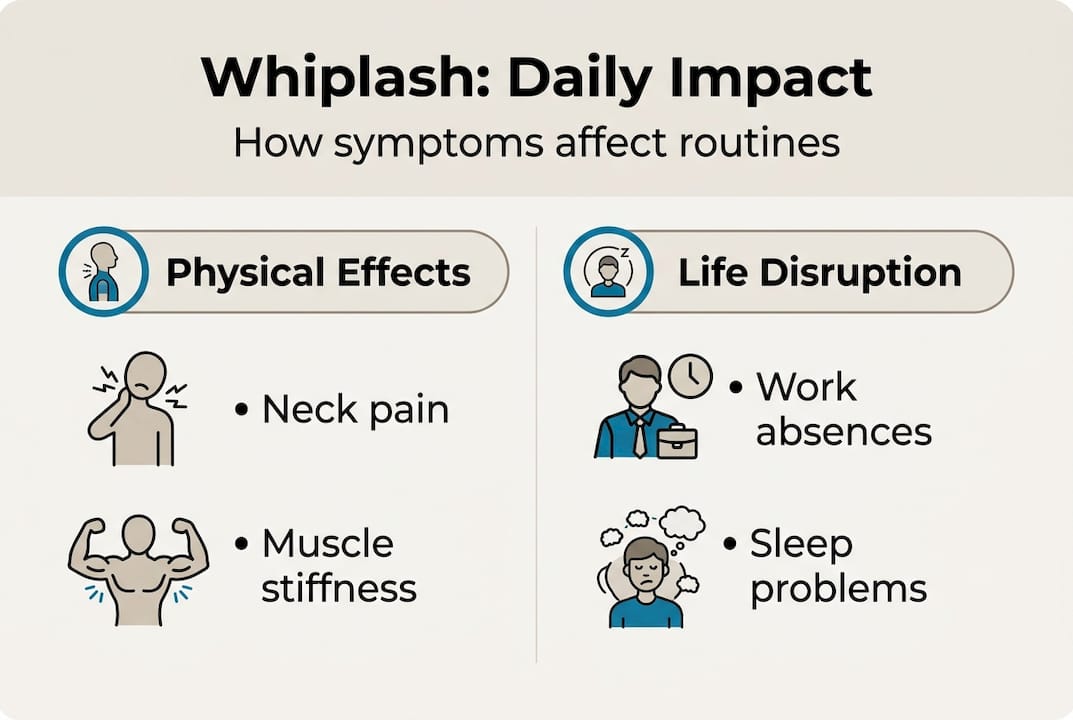
Practical tips for managing the process
Start recording your expenses as soon as possible after the accident. Even small amounts add up, and it is much harder to reconstruct a list months later. Keep a notebook in your car or use a notes app on your phone. Take photos of receipts and store them in a folder. If you are unsure whether something is claimable, note it down anyway and ask your legal adviser. It is better to have too much information than too little. Also, be honest about your recovery. If your symptoms improve, that is good news for your health, even if it reduces the value of the claim. The medical prognosis should reflect your actual condition, not an exaggerated one.
What this means for you
Understanding the range of travel expenses, treatment costs, lost earnings and other financial losses that can form part of a whiplash compensation claim helps you approach the process with clearer expectations. You do not have to absorb those costs yourself. A well-prepared claim looks at the full picture, both what you have already lost and what you are likely to lose in the future. The key is good record-keeping and a clear medical prognosis. With those in place, you can focus on your recovery while the legal process works through the details.